
The Key to Solid-State Battery Performance
In the fast-evolving landscape of solid-state batteries (SSBs), electrode coating technology stands as the cornerstone of performance, scalability, and cost-efficiency. As a TOP5 client-recognized supplier of all-solid-state battery pilot line equipment, Chamfey Materials & Intelligent Equipment Factory specializes in delivering cutting-edge solid-state battery dry electrode coating machine solutions. Today, we dive into the critical differences between dry electrode coating and wet electrode coating, and why dry technology is revolutionizing SSB manufacturing—specifically for dry electrode coating for cathode of solid-state batteries and dry electrode coating for anode of solid-state batteries.
1. What Are Wet Electrode Coating & Dry Electrode Coating?
Wet Electrode Coating (Traditional Mainstream)
Wet coating is the decades-old standard for lithium-ion batteries. It involves mixing active materials, conductive additives, and binders (e.g., PVDF) in toxic organic solvents (e.g., NMP) to form a slurry. This slurry is coated onto current collectors, then dried in long ovens to evaporate solvents, followed by calendaring.
Dry Electrode Coating (SSB-Optimized Innovation)
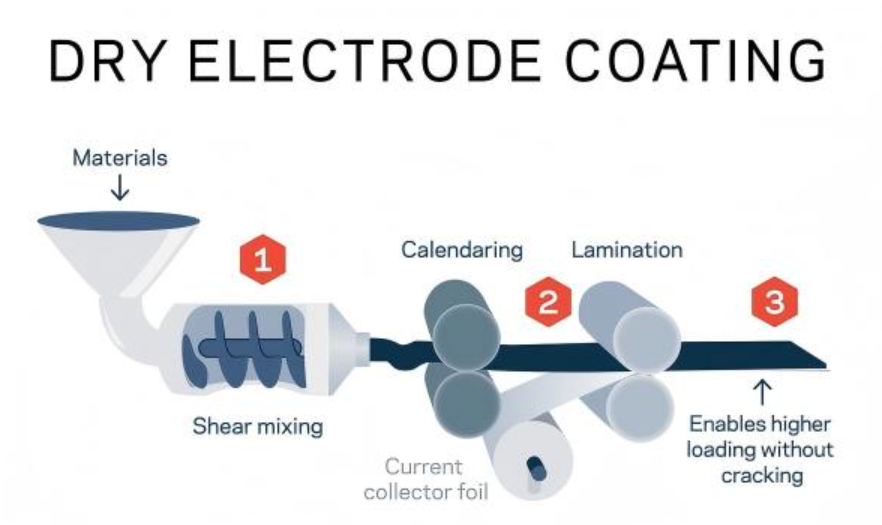
Dry coating is a solvent-free process designed for next-gen SSBs. It directly blends solid powders (active materials, conductive agents, binders) via high-shear mixing, fibrillating binders into a 3D network. The mixture is compacted into self-supporting films, then laminated onto current collectors—no solvents, no drying, no recovery systems.
2. Critical Challenges of Wet Coating for Solid-State Batteries
While mature, wet coating is fundamentally incompatible with SSB requirements, creating major bottlenecks:
- Solvent Compatibility Crisis: Most sulfide/halide solid electrolytes react violently with polar solvents like NMP, causing electrolyte decomposition, severe interfacial degradation, and irreversible performance loss.
- Uneven Electrode Microstructure: During drying, binders migrate to the electrode surface, creating dense top layers and porous bottom layers. This inhomogeneity increases ionic resistance, reduces lithium diffusion, and shortens cycle life.
- High Cost & Energy Waste: Solvent recovery systems account for 25% of line investment; drying consumes 46% more energy than dry processing. Toxic solvents also raise environmental and safety risks.
- Thick Electrode Limitations: Wet-processed thick electrodes suffer from extreme porosity variation, making them unsuitable for high-energy-density SSBs.
3. Advantages of Dry Electrode Coating for SSB Cathodes & Anodes
Dry coating solves wet process flaws and unlocks SSB potential—especially for dry electrode coating for cathode of solid-state batteries and dry electrode coating for anode of solid-state batteries:
Superior Interfacial Contact & Electrochemical Performance
- No solvent residue means zero electrolyte degradation; shear force during dry mixing deforms solid electrolyte particles, boosting coverage on active materials.
- Uniform binder distribution eliminates migration, creating consistent microstructures for faster lithium diffusion, lower impedance, and 20–30% higher capacity retention.
- Ideal for both cathode (e.g., NCM, LFP) and anode (e.g., graphite, silicon) coatings in SSBs.
Unmatched Cost & Energy Efficiency
- Eliminates solvent purchase, recovery, and drying costs—15–19% lower manufacturing costs and 35–50% less energy consumption.
- Simplified process cuts equipment length by 40%, reducing factory space and labor costs.
Environmental Sustainability & Safety
- Zero VOC emissions and no toxic solvents, aligning with global green manufacturing goals.
- Closed-loop powder handling minimizes dust, improving workshop safety and compliance.
Scalability for Pilot & Mass Production
- Supports thick electrodes (40–300 μm) for high energy density (500+ Wh/kg).
- Compatible with sulfide, oxide, and halide solid electrolytes—critical for multi-material SSB R&D.
4. Chamfey: Your Trusted Partner for Dry Electrode Coating Solutions
As a TOP5 client-recognized supplier of all-solid-state battery pilot line equipment, Chamfey Materials & Intelligent Equipment Factory delivers turnkey solid-state battery dry electrode coating machine solutions tailored for dry electrode coating for cathode of solid-state batteries and dry electrode coating for anode of solid-state batteries:
- Precision Engineering: Our dry coating systems feature ±1 μm roller gap control, ensuring exceptional areal density uniformity for both cathodes and anodes.
- Full Compatibility: Works with all SSB electrolyte types (sulfide, oxide, halide) and electrode materials (NCM, LFP, graphite, silicon).
- Pilot-to-Production Scalability: Compact pilot line designs for lab R&D, scalable to 5–8 GWh mass production lines.
- Proven Performance: Trusted by global SSB developers for reliable, high-yield dry electrode production that accelerates time-to-market.
5. Conclusion: Dry Coating—The Future of SSB Manufacturing
Wet electrode coating, once the industry standard, is no longer viable for high-performance, scalable solid-state batteries. Dry electrode coating—with its solvent-free design, superior interfacial performance, and cost efficiency—is the definitive choice for next-gen SSBs, especially for dry electrode coating for cathode of solid-state batteries and dry electrode coating for anode of solid-state batteries.
As a leader in SSB pilot line equipment, Chamfey Materials & Intelligent Equipment Factory empowers your R&D and production with state-of-the-art solid-state battery dry electrode coating machine solutions. Ready to unlock the full potential of your solid-state batteries? Contact Chamfey today for customized dry coating equipment and process support.
