
Solid-state battery – Material system classification
Oxide-based: LLZO, LATP, LAGP
Sulfide-based: Li₂S-P₂S₅, Li₃PS₄
Polymer-based: PEO, PVDF-HFP
Composite base: Polymer + Inorganic fillers, oxides + Sulfides
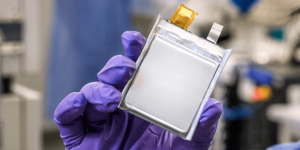
Solid-State Battery
Classification by Material System, Dry Electrode and Electrolyte Technology
The performance and application prospects of solid-state batteries are primarily determined by their material systems, with solid electrolytes serving as the core component. Currently, mainstream solid-state batteries are categorized into several typical systems based on different electrolyte materials. As a critical link bridging laboratory research and development (R&D) and large-scale industrial production, solid-state battery pilot line equipment manufacturers play an indispensable role in providing customized pilot line equipment for material testing, electrode fabrication, and electrolyte processing across various solid-state battery systems.
Oxide-based solid-state batteries employ electrolytes such as LLZO, LATP, and LAGP, which exhibit high chemical stability, a wide electrochemical window, and strong rigidity. These characteristics make them well-suited for high-voltage battery systems and scenarios with stringent safety requirements. To address the rigid nature of oxide electrolytes and ensure superior interfacial contact, solid-state battery pilot line equipment manufacturers offer specialized pilot line apparatus, including high-pressure lamination equipment, tailored to the unique processing needs of this material system.
Sulfide-based solid-state batteries utilize typical electrolytes such as Li₂S-P₂S₅ and Li₃PS₄, which boast high ionic conductivity comparable to liquid electrolytes and excellent flexibility. Consequently, they are widely applied in pouch cells and high-energy-density electric vehicle (EV) batteries. Given the susceptibility of sulfide electrolytes to oxidation and moisture absorption during pilot production, solid-state battery pilot line equipment manufacturers design dedicated pilot line systems integrated with inert gas protection and vacuum encapsulation functions, effectively mitigating material degradation risks.
Polymer-based solid-state batteries adopt polymer electrolytes such as PEO and PVDF-HFP, featuring excellent processability and electrode compatibility. They are mainly utilized in flexible electronic devices and high-temperature operating environments. Composite-based systems, which combine polymers with inorganic fillers or integrate oxide and sulfide materials, balance the advantages of diverse material systems and significantly reduce interfacial resistance—serving as a crucial transitional solution for the industrialization of all-solid-state batteries. Solid-state battery pilot line equipment manufacturers provide integrated pilot line solutions to match the production requirements of different composite systems, enabling enterprises to efficiently optimize process parameters and accelerate technical validation.
In addition, emerging material systems, including halide (e.g., Li₃YCl₆) and nitride (e.g., Li₃N) electrolytes, have demonstrated high ionic conductivity in laboratory studies, though their stability remains to be further improved. Pilot line equipment supplied by solid-state battery pilot line equipment manufacturers plays a pivotal role in performance verification and process optimization for these emerging systems, facilitating their transition from lab-scale R&D to practical application.
Based on the content of liquid electrolyte, solid-state batteries can be further classified into semi-solid-state batteries (with no more than 10% liquid electrolyte) and all-solid-state batteries (without any liquid electrolyte). The latter offers distinct advantages in terms of safety and energy density. Solid-state battery pilot line equipment manufacturers can customize corresponding pilot line equipment according to the unique characteristics of semi-solid-state and all-solid-state batteries, covering the entire production process from material mixing to cell assembly.
Dry electrode technology is a key process driving the industrialization of solid-state batteries and a core R&D focus for solid-state battery pilot line equipment manufacturers. This technology forms electrodes through mechanical mixing, fiber formation, and pressure lamination, eliminating the need for organic solvents (such as NMP) and traditional drying procedures. By optimizing dry electrode preparation equipment, solid-state battery pilot line equipment manufacturers can significantly reduce energy consumption and production costs, while enhancing electrode compaction density and overall battery energy density.
Furthermore, this equipment avoids chemical reactions between solvents and sensitive electrolytes (e.g., sulfides), ensuring high compatibility with solid-state systems. The main technical challenges of dry electrodes—including poor interfacial contact and insufficient bonding strength—can be effectively addressed through optimized binder formulations and high-pressure lamination processes integrated into pilot line equipment by solid-state battery pilot line equipment manufacturers.
For solid-state electrolytes, key performance indicators include ionic conductivity, electrochemical window, interfacial resistance, and stability. In general, sulfide electrolytes exhibit the highest ionic conductivity, followed by oxide and polymer electrolytes. Oxide electrolytes offer a wider electrochemical window, while interfacial resistance has long been a core bottleneck in solid-state battery systems—one that can be alleviated through composite electrolyte technologies and dry electrode integration. Solid-state battery pilot line equipment manufacturers provide professional electrolyte testing apparatus, enabling customers to accurately measure these key indicators and optimize electrolyte formulations and process parameters.
The porous structure formed by dry electrodes provides sufficient channels for electrolyte infiltration. Sulfide electrolytes, with their excellent flexibility, can form an ideal industrial combination with dry electrodes, reducing interfacial defects and enhancing battery cycle stability. Solid-state battery pilot line equipment manufacturers integrate these two critical technologies into their pilot line systems, achieving efficient and stable pilot production for enterprises.
In summary, the material system defines the upper limit of solid-state battery performance, while dry electrode and electrolyte technologies serve as core driving forces for industrial application. As an essential part of the solid-state battery industrial chain, solid-state battery pilot line equipment manufacturers deliver reliable, efficient, and customized pilot line solutions that adapt to diverse material systems and process requirements. Oxide systems are suitable for high-safety demands, sulfide systems focus on high-energy-density scenarios, and the combination of composite systems and dry electrodes will be the optimal path to balancing performance, cost, and large-scale production—with solid-state battery pilot line equipment manufacturers providing comprehensive support throughout this industrialization journey.
Supplier of equipment for pilot line of solid-state batteries-Chamfey
Solid-State Battery Technology
Solid-State Battery Manufacturing
Battery Production Equipment
Solid Electrolyte
Electrode Coating Machine
Dry Process Manufacturing
Solid-State Battery Assembly Line
Battery Production Line Equipment
Battery Testing & Inspection Equipment
Roll-to-Roll Production
Thin-film Battery Production
Electrode mixing & blending machines
Coating & calendering systems
Dry room & humidity control equipment
Cutting & stacking equipment
Cell assembly and stacking machines
Formation & capacity testing equipment
Inspection & quality control systems
Packaging & sorting machines
Roll-to-roll dry electrode production
What is Solid-State Battery Technology?
Core Manufacturing Processes of Solid-State Batteries
Key Production Equipment & Machines for Solid-State Batteries
Advanced Dry Electrode & Solid Electrolyte Processing
How Solid-State Battery Production Differs from Li-ion
Applications and Industry Trends in Solid-State Battery Production
Challenges in Scaling Up Solid-State Battery Manufacturing
Solid-State Battery Manufacturing Equipment,Dry Process Electrode Production
Solid-state battery cathode materials: NCM, NCA, LCO, LFP, LVP, LFVP, Li-rich Manganese-Based Oxide, NCM811/9055
Solid-state battery anode materials: Lithium Metal Foil, Lithium Alloy Foil, Natural Graphite, Artificial Graphite, Hard Carbon, Soft Carbon, Silicon-Based Materials, Tin-Based Materials, Germanium-Based Materials, Lithium Titanate, Niobium Oxide, LNMO
